
Short answer: Developmental language disorder (DLD, in Slovakia often called developmental dysphasia) mainly affects language: a child struggles to speak or understand, but usually wants to communicate and uses gestures, facial expressions and pointing to get there. In autism the whole of social communication is different, including the non-verbal part, and there is often a need for routine and different sensory processing. The two can occur together. Only a professional assessment can tell them apart.
What is developmental language disorder?
DLD is a difficulty with language development. Hearing, intelligence and interest in people can all be typical, but the brain processes language differently. A child may:
- start talking late or say little,
- have a small vocabulary and grammar mistakes,
- find longer sentences and instructions hard to follow,
- mix up words or sounds.
How do you tell DLD from autism?
| Area | More typical of DLD | More typical of autism |
|---|---|---|
| Wish to communicate | wants to, tries hard, gets frustrated when not understood | shares interest less, communicates mainly to get needs met |
| Non-verbal communication | rich use of gestures, facial expressions, pointing | fewer gestures, less pointing and shared looking |
| Eye contact | usually natural | often reduced or inconsistent |
| Play | pretend play with other children | solitary play, repetition, lining things up |
| Routine and senses | typical flexibility | strong need for routine, sensitivity to sound or touch |
| Repeating words | less typical | echolalia, repeating lines from cartoons |
The table is a guide, not a diagnosis. Signs can overlap and a child can have both DLD and autism.
Why does the difference matter?
Because support depends on it. A child with DLD mainly needs intensive speech and language therapy. An autistic child also needs help understanding social situations, a predictable environment and support with sensory overload. If autism is missed, a child may get only part of the help they need.
Who makes the diagnosis?
- A speech and language therapist assesses speech and language.
- A clinical psychologist and a child psychiatrist assess social communication and possible autism.
- A school counselling service helps with support at nursery and school.
Your paediatrician is the first step. If you have concerns, do not wait for things to "sort themselves out". Early speech therapy and early autism support both work best. Warning signs by age are in Signs of autism in children and the comparison with delayed development in Autism or delayed development.
How can you help at home?
- Speak slowly, in short sentences, and give your child time to answer.
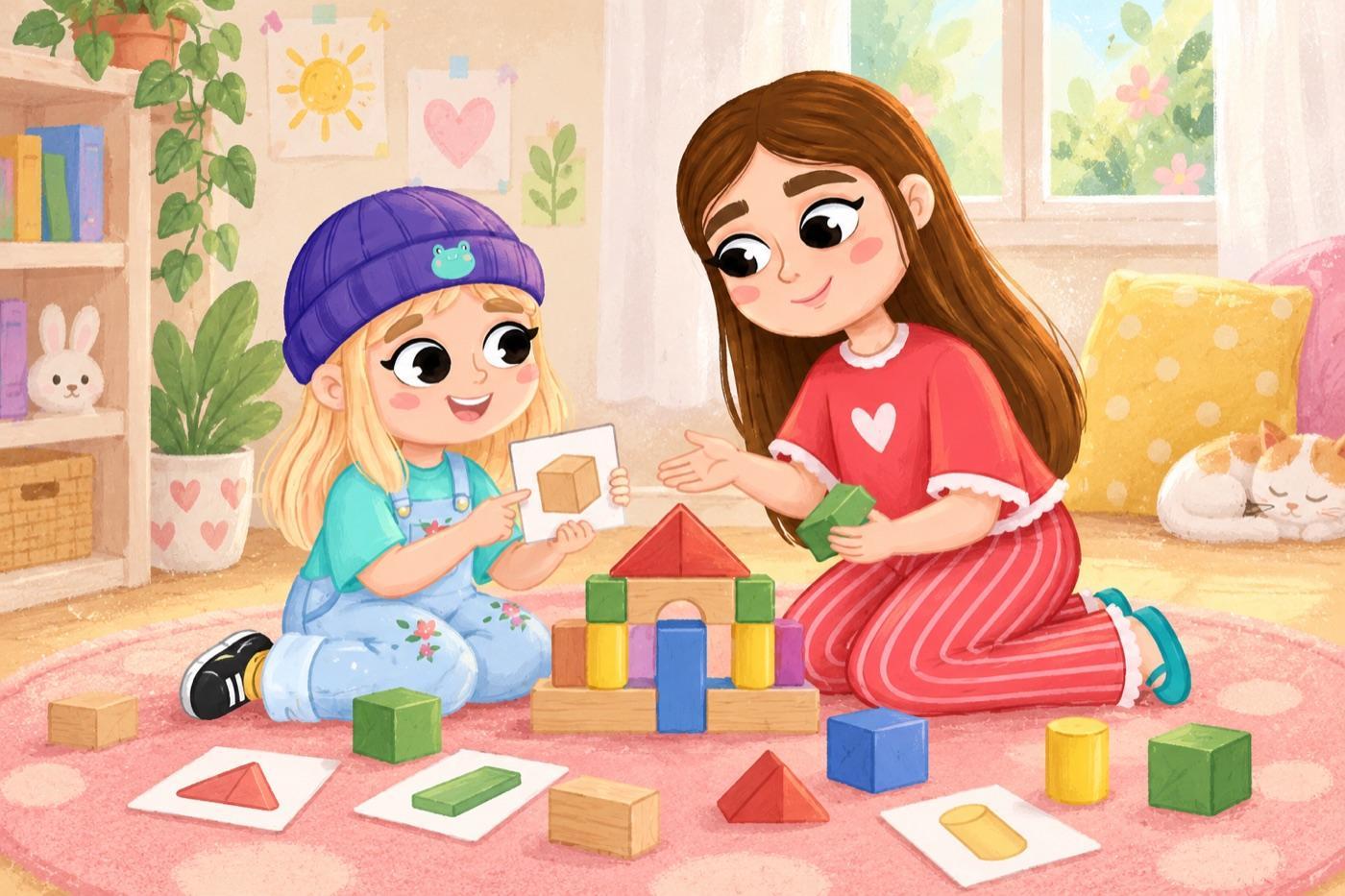
- Show what you say: pictures, objects, gestures.
- Read picture books together and name what you see. The TAMITOS book has a character for each feeling, so you can talk about emotions even with few words.
- Praise every attempt to communicate, not only the right word.
Frequently asked questions
Can a child have both DLD and autism? Yes. Language difficulties are common in autism and some children have both diagnoses.
At what age can DLD be identified? The first signs often appear around age 2 to 3, when speech does not develop as expected. A more precise diagnosis usually comes in the preschool years.
Will my child grow out of DLD? DLD is long-term, but with regular speech therapy language improves a lot. Many children manage mainstream school with support.
Is echolalia always a sign of autism? No. Repeating words is a normal stage of language development. If it lasts a long time and is the main way a child uses speech, talk to a professional.
This article is general information for parents and does not replace a professional assessment.