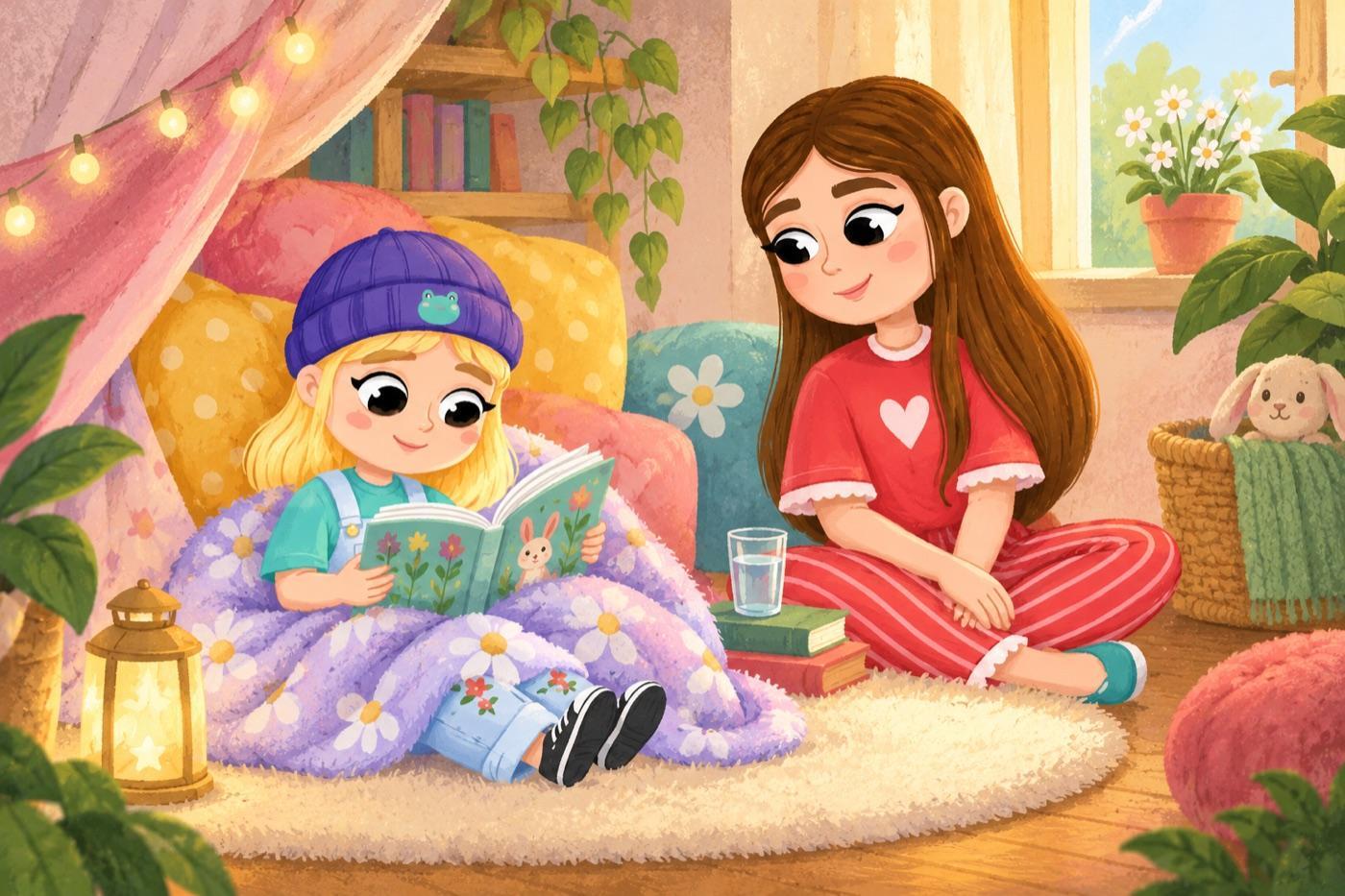

Short answer: A shutdown is the quiet reaction of an overloaded nervous system. In a meltdown the tension comes out (screaming, crying); in a shutdown the child "switches off": goes quiet, stops responding, stops talking or withdraws. It is not defiance or laziness. The child needs calm, fewer stimuli and time to recover.
What does a shutdown look like?
A shutdown is easy to miss because the child does not disturb anyone. Typical signs:
- stops talking or answers only in single words,
- does not respond to their name or to questions,
- stares into space, seems absent,
- withdraws into a corner or under a blanket, covers ears or eyes,
- cannot make even simple decisions,
- moves slowly or "freezes" in place.
For some children a shutdown comes after a long school day, for others after a noisy party, a shopping trip or a big change.
What is the difference between a shutdown and a meltdown?
| Meltdown | Shutdown | |
|---|---|---|
| What it looks like | screaming, crying, dropping to the floor, hitting | silence, withdrawal, absence |
| Direction of energy | outward | inward |
| What others think | "badly behaved child" | "they are fine, just quiet" |
| What the child needs | safety, fewer stimuli, time | safety, fewer stimuli, time |
Both reactions have the same cause: the nervous system got more than it can process. Some children tend to have meltdowns, others shutdowns, many have both.
Why does a shutdown happen?
The most common triggers are noise and chaos, crowds, unexpected changes, tiredness, hunger, demanding social situations or long masking, when a child spends the whole day trying to act "like everyone else". That is why shutdowns often happen at home: the child holds on at school and switches off at home.
How can you help a child during a shutdown?
- Do not ask questions or demand answers. Speech is too hard at that moment.
- Reduce stimuli: dim the lights, turn off the sound, take siblings elsewhere.
- Stay close, but do not push: sitting quietly next to the child is enough.
- Offer, do not insist: a blanket, water, a favourite object, headphones.
- Give time: recovery can take minutes or hours.
Leave the conversation about what happened for later, when the child has rested.
How can you prevent shutdowns?
- Plan a calm afternoon with no extra demands after a hard day.
- Watch for early signs: tiredness, irritability, going quiet.
- Agree on a signal with your child (a card, a gesture) that means "I need a break".
- Name feelings. In the TAMITOS book this state belongs to Mellowlet, who needs quiet and time when his energy runs low. A child can then say "today I feel like Mellowlet".
More about sensory overload in Sensory overload in children.
Frequently asked questions
Is a shutdown dangerous? A shutdown itself is not dangerous, it is the nervous system protecting itself. If it happens very often or your child stops managing everyday things, talk to a professional.
Can children without autism have shutdowns? Other children know similar states too, for example when very tired or stressed. In autism and ADHD they are more frequent and more intense.
How long does a shutdown last? It varies, from a few minutes to hours. After a big overload a child may need a quieter next day as well.
What is autistic burnout? When overload builds up over weeks or months, long-term exhaustion can follow, with a loss of energy and skills. In that case, seek professional help.
This article is general information for parents and does not replace a professional assessment.